
There were so many excellent creative entries submitted in our fourth year that it was truly difficult to choose the winner, which saw the introduction of third and second place prizes for our Student Awards.
Creative Prize
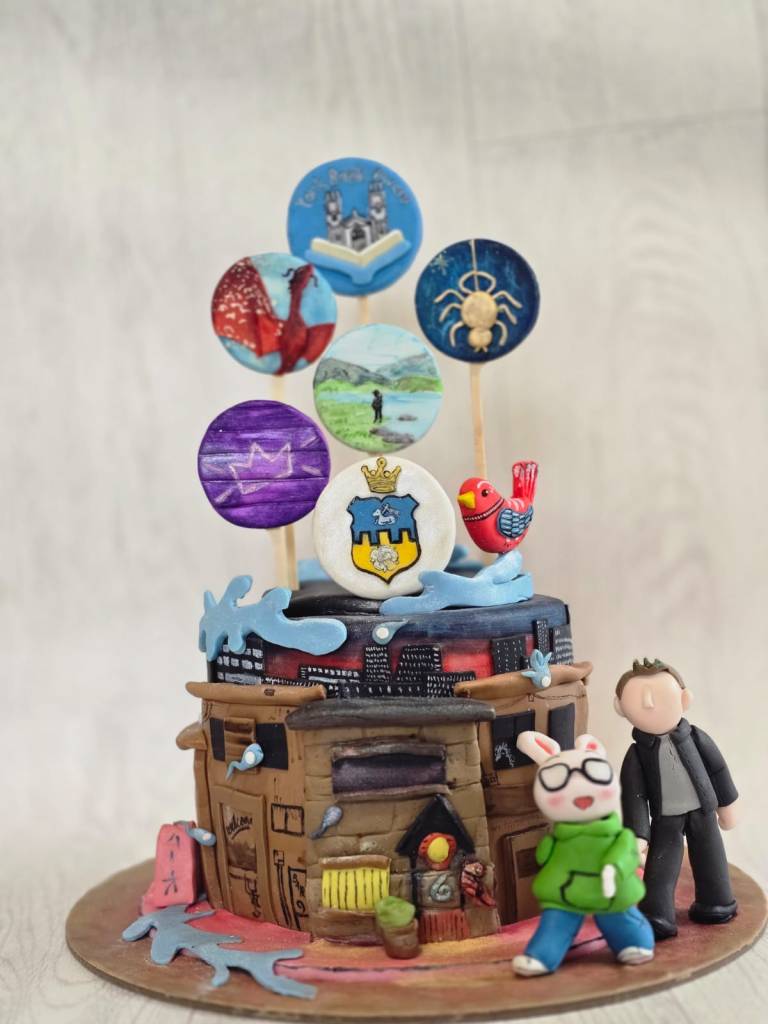
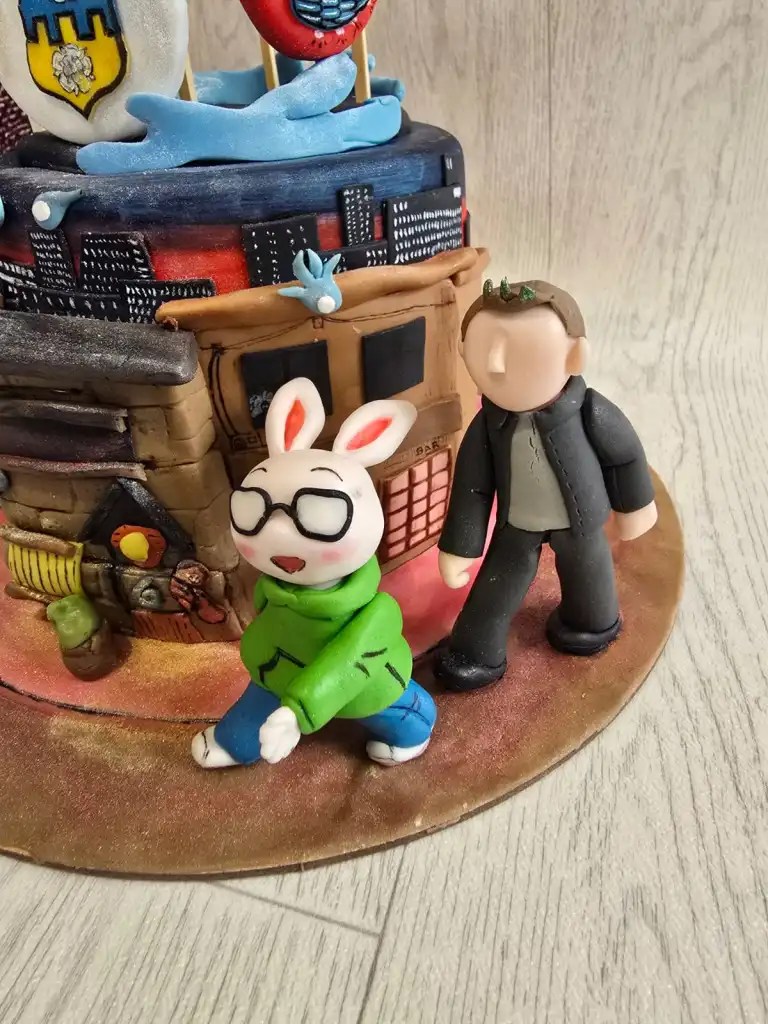
The winner of the 2025 Creative Prize was Shayini from All Saints Catholic School for her spectacular cake representing all of this year’s shortlisted titles, with a particular focus on 100 Tales from the Tokyo Ghost Café. The judges were blown away by the talent and artistry rendered vividly in fondant. Shayini was awarded the Creative Prize trophy and a £10 book token.
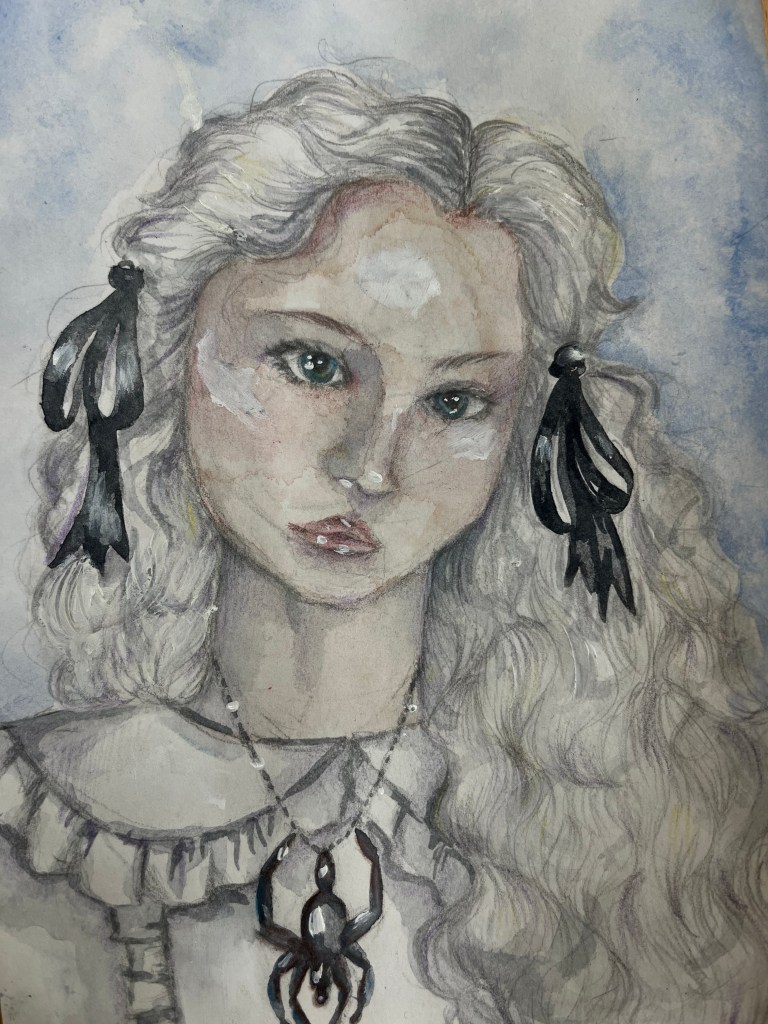
Second place in the Creative Prize went to Srija from St Peter’s School, for her haunting and interpretive portrait of Etta Starling from The Stitchwort Curse. Srija received a second place certificate and a £10 book token.
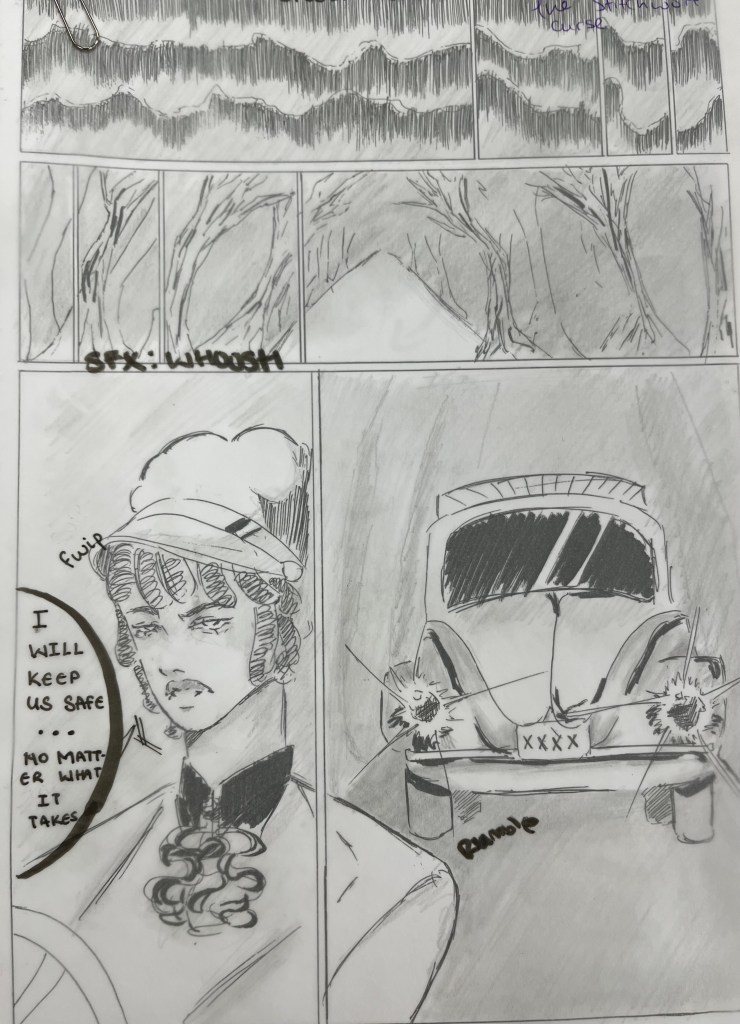
Third place was taken by Kene from Vale of York, for an amazing graphic adaptation that showcased great interpretation and engagement with the text. Kene took away the third place certificate and a £10 book token.
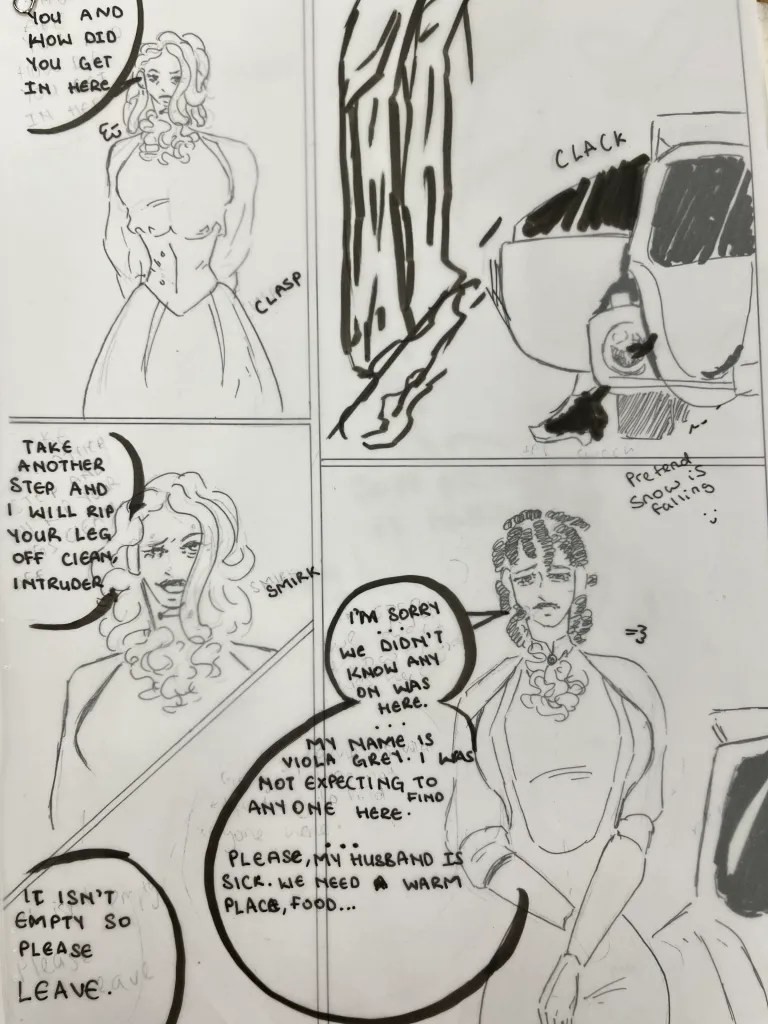
The entries given judges’ commendations, who received a commendation certificate and a special badge were:
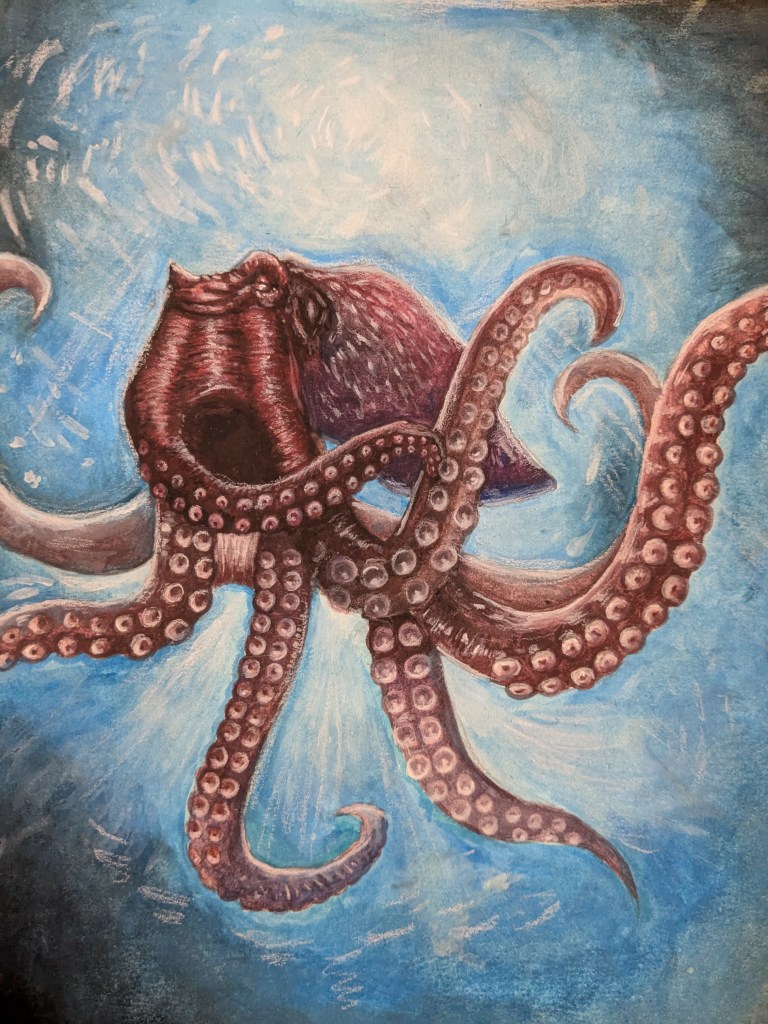
Ayla, from Millthorpe, for her beautiful painting of a kraken from Impossible Creatures
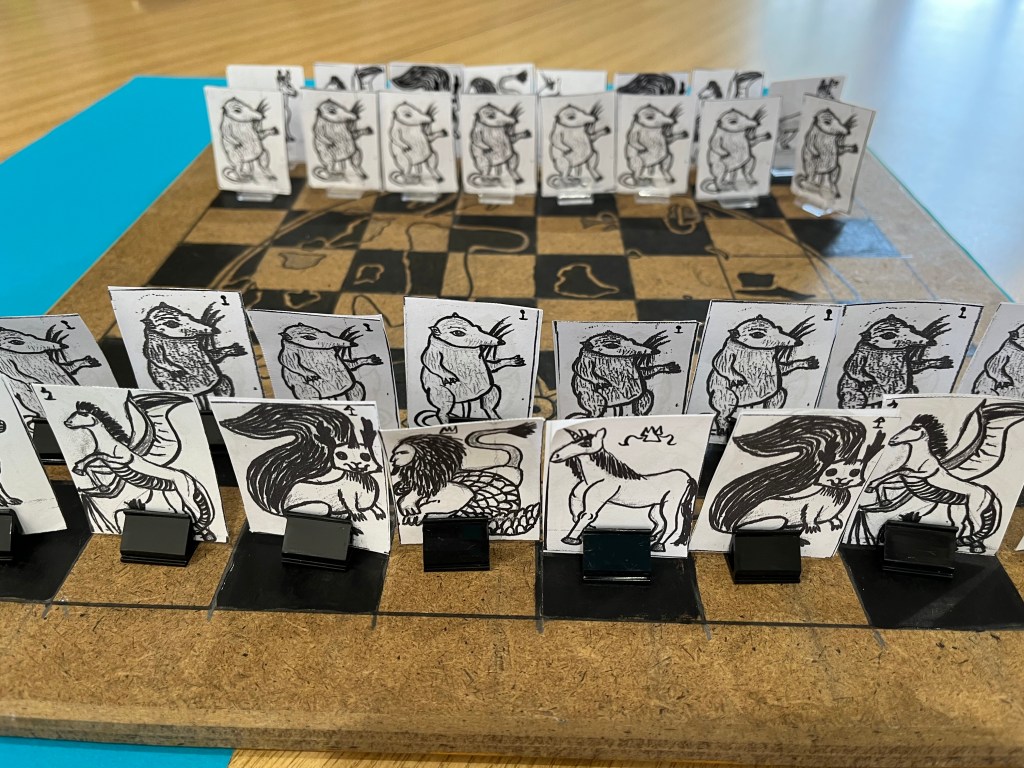
Bill, William and Noah from All Saints Catholic School, for their innovative interpretation of Impossible Creatures in the form of a chess set.
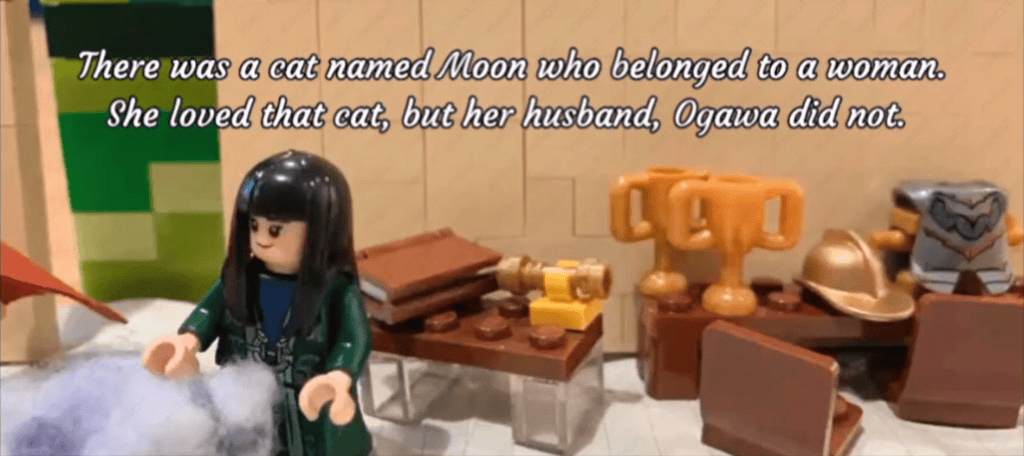
Emily and Molly from All Saints Catholic School, for their delightful stop-motion film and composition inspired by 100 Tales from the Tokyo Ghost Café.
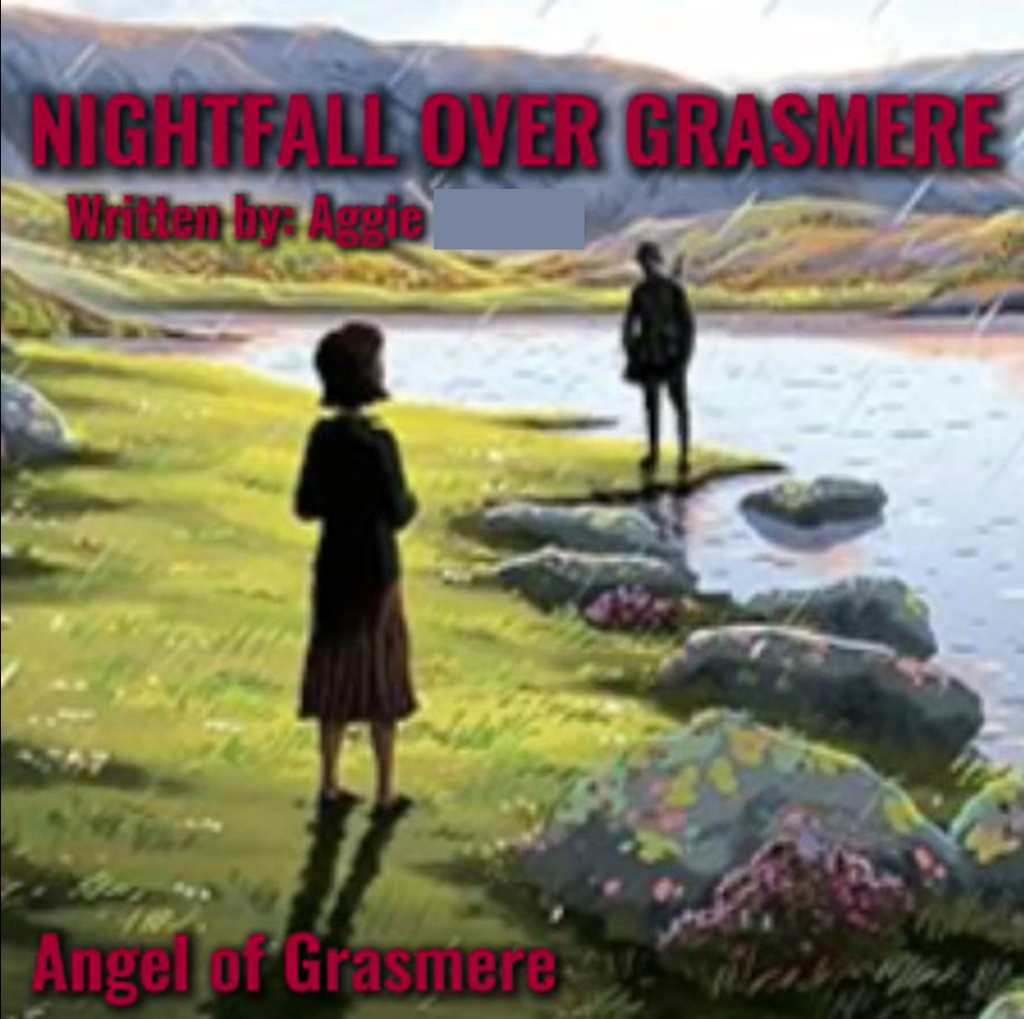
Aggie, from All Saints Catholic School, for her evocative composition which conveys hope in the face of adversity in Angel of Grasmere.
Review Prize
The winner of the 2025 Review Prize was Alice from Millthorpe School for her wonderful review of 100 Tales from the Tokyo Ghost Café. The judges were impressed with the way Alice discussed the dual-narrative and dual-format nature of the book. Alice was presented with the 2025 Review Prize trophy and a £10 book token.
100 Tales from the Tokyo Ghost Café was, in my opinion, an absolutely amazing supernatural book, mixed with the truths of Japanese culture and folklore.
The mixture of graphics and written stories really alleviated the novel and showed the connections between the spirits and Julian and Chie’s journey through Japanese history. The beautifully illustrated graphic novel components were stunning and all of the different tales were spectacularly mixed and intertwined like vines winding around the outside of a quaint country house. The characters were all unique and had their own personalities. Just mentioning Chie’s inquisitive nature and the knowledge they seemed to possess about the Japanese spirits and Julian’s cautious awe at being introduced to the spiritual domain for the first time, you know that you have a thrilling read ahead. All of the diverse and rare spirits and creatures were enthralling and their different tales of woe – Moon’s tale – or business – the kappa – or even the briefest hint of love – between the 2 characters who experienced the tsunami were so beautifully linked at the end of the novel that a ravishing tapestry of Japanese folklore was woven as the tale progressed.
This fabulous tale of cultures and legends and the journey through the mystical tales of folklore and fables touched my heart and allowed me to escape the challenges of everyday life to experience the exquisite dimension of 100 Tales of the Tokyo Ghost Café.
Second place in the Review Award was Rose T. from All Saints Catholic School, for her review of Angel of Grasmere. The judges were impressed with her description of the two narratives in the book and how they intertwine. Rose was presented with the Second Place certificate and a £10 book token.
Angel of Grasmere is a lovely historical fiction set in the gorgeous and dramatic scenes of the Lake District.
The story follows Tarn, a young girl struggling to come to terms with her brother’s death and the looming prospect of the invasion of Britain. Woven through this is the story of a young man’s journey to recovery from shell shock.
The beautifully described views of the Lake District contrast starkly with the brutal and horrific scenes the young man relives. In an attempt to shake off the guilt of being a deserter, the man decides to help the scared citizens of Grasmere. These kind acts lead to the man being named the anonymous Angel of Grasmere – a title which readers feel he deserves.
The two narratives tying together at the end may not surprise readers, but is beautifully told as the young man (Joss) is revealed to be Tarn’s lost brother.
This wonderful tale of healing and re-discovering was a delight to read. I loved it!
Third place went to Matthew from Millthorpe School, for his review of The Stitchwort Curse. The judges enjoyed his insight into the larger world at play in the novel. Matthew was presented with the third place certificate and a £10 book token.
The Stichwort Curse is a book about a pair of youths discovering the secrets of their family’s colourful history. Written by Alexandra Dawe, this book explores the large house and grounds at Stitchwort: a place where some have gifts of magic. It is a building like no other as it is magically protected so no outsider may enter. This makes life rather dull for Etta Starling, the youngest direct descendant of a long line of intelligent people. That is until a relative they did not know they had decides to visit.
During the Nazi dictatorship the young Starling cousins are meeting magical creatures, ghosts and spiders. Uncovering long-forgotten controversy and learning about each other. Key to the book is the Stitchwort curse which prevents the Starlings from leaving the grounds for fear of death. But does it exist, and if so why?
In a more thematic sense, this book shows young readers a message against colonialism in a simple but specific way, teaching us when we do not realise when we are being taught.
It is an overall engaging and enjoyable piece of fiction for younger readers containing developed and amiable characters.
The following students were highly commended by the judges for their reviews, and took away special badges and certificates:
Toby W from All Saints Catholic School, for his review of King of Nothing:
King of Nothing, published in 2024, has been praised by the Guardian for its humour and shortlisted for a Carnegie Medal. Here, it is reviewed for the still more prestigious York Book Awards.
The book is set in London in the south of England – though it will seem quite alien to many readers, for reasons discussed later. The book, over the course of its 309 story-bearing pages, chronicles the character arc of Anton, a troubled youth in Year 9 who narrates the story.
The narrative begins with Anton musing on violence, in relation to he and his group of friends attacking a child in retribution for a slight to one of them. The book then shows further evidence of Anton’s depravity, as he mocks his friends, ignores the needs of his ailing grandmother and even insults a teacher. There is, however, some evidence of a deeper morality to him – he shows genuine love for his family, silently dislikes his friends’ more contemptible behaviours, and is complicit in kicking a football that hit someone into the street.
As the book progresses, Anton gradually changes, making new friends and growing apart from his old ones; also taking more interest in his studies and the world outside his social group. Although he tries to maintain his old relationships with his old friends, he must eventually make a life-defining choice.
Many would deride this book for various reasons, including the confusing dialect, to which no guide or explanation is given; the unpleasantness of the protagonist; the fact that Matthew can come across as more of an annoying child than positive influence; and the presence of several clichés which can seem ubiquitous in King of Nothing’s genre such as the wise authority figures originally ignored by the teenager, the bully learning the error of his ways, the death of an elderly relative, and the estranged father. On the other hand, perhaps these people are just not the intended audience for the book – indeed, for King of Nothing’s many puns, it is a hilarious and heartwarming tale with a deeper message.
Darcey from Millthorpe School for her review of King of Nothing:
King of Nothing is funny, insightful and generally eye-opening. It takes us into the lives of two very different Year Nines, showing the differences between Anton and Matthew in a heart-warming and relatable way.
When he becomes friends with Matthew, Anton has to choose between protecting his reputation as ruler of the school and doing what he knows is right and prioritising his future. Lessore writes in a way that is comedic yet realistic, giving readers Anton’s – sometimes stupid – inner dialogue which really helps the story to progress.
The parallels between Matthew’s distant father who doesn’t bother to try and Anton’s criminal father who just can’t get it right add to the dynamic. Additionally, the plot twists left me speechless. However, it did feel like this book only just got started halfway through, and the main scenes – while excellently written – could’ve come a lot earlier.
To conclude, this book shows a very unique perspective and really challenges readers’ own views on tricky topics, such as gender inequality and bullying, in a way that is still enjoyable to read. ⅘ stars.
Edith from The Joseph Rowntree School, for her review of The Stichwort Curse:
The Stitchwort Curse is a novel that explores friendship, trust, and betrayal. The story begins in the Stitchwort House, where Etta and her family are forced to live under a family curse. One day, they have a surprise visit from their relatives – Felix and his parents – who aren’t supposed to be alive out of Stitchwort under the curse. These living relatives lit Etta’s hope of escaping Stitchwort and the wish for freedom in the outside world. While absconding from Stitchwort, Etta also discovers some ambiguous relationships and pasts her family have.
Etta is an adventurous girl with the power to hegemonize spiders. However, as a result of the curse, she has no experience of friendship. Therefore, when she meets Felix, having a friend often irritates her. In contrast, Felix is timid and has a more amiable personality.
One of my favourite things in the book is how the author shows the growth of the characters. Not just the kids, but the adults as well. In the story, Felix’s mother realises that hiding from the war and the world, like the Starlings comes with a price and is not a solution. The growth in matureness of Felix and Etta’s friendship takes you into the story, as well as the moving storyline, which relates to my favourite quote, “Everything is going to change.”
The book’s layout is truly astonishing, with hundreds of spiders crawling on your page, you can sense the pressure of the danger (especially if you have arachnophobia). The illustrations are candidly remarkable as they befit the genre and storyline.
This book is notable as my start of 2025, with its disturbing setting and obscure storyline. However, understanding what is happening in the beginning will be more complex, with its complicated background. As a result, you might find it different when you reread it.
Isaac N. from St Peter’s School for his review of 100 Tales from the Tokyo Ghost Café:
100 Tales from the Tokyo Ghost Café is a fiction illustrating the journey of the author and illustrator, as they collect ideas from the north of Japan with Akira, a boy who got lost and stayed in the Ghost Café. The story floats from the manga’s main storyline to some related prose interludes of ghost stories. It explores different Japanese myths and demons, as well as friendship, kinship, and partnership. Creating a heart-warming, moving story.
I like the idea of writing a story with yourselves as the main character because as I read the book, I can feel like they are telling me their real story, with the contrast of the illustrator being a rabbit, which blurs the ambiguous margin of myths, stories, and reality and helps you to get into the story more. There is also the appearance of the characters from Tsunami Girl, like Halfwave and Yuki’s grandpa, this makes the storyline and the worldview of the book to be more magically mysterious.
The creators’ mixture of prose and manga is one of their biggest specialties. It allows different stories to merge smoothly without causing confusion. I also enjoyed the illustrations, as they sync with the prose in the same style and visualize the Japanese mythological monsters, which helps you get deeper into the storyline.
Personally, I like this book, including the character designs, storyline, ending, and its role as an epilogue/extension of Tsunami Girl.
Rose S. from Manor CE Academy for her review of King of Nothing:
This story is about a boy who is the supposed ‘king’ of the school. Everyone respects him. He is an unruly gang member and is rude to most of the teachers. His dad is in jail so people are almost scared of him and he almost likes it that way! So when he gets into heaps of trouble at school, he doesn’t care to be fair, but his mum most definitely does. She decides it’s time for Anton to make
some new ‘better’ friends and join the Happy Campers, a local activity group. Anton would quite literally rather do anything else, especially when he finds out Matthew, the biggest loser in school, is also a member.
But an unlikely friendship sparks when Matthew saves his life. He starts seeing school differently, thinking about his future careers and making lots of reliable good quality friends much to the disapproval of the most rebellious member of his ‘gang’, Kehinde, and he ends up having to make the decision between being the king of the school and a good friend.
The opening of this story is really fast paced and exciting; delving straight into the toxic masculinity that Anton experienced at school. This story really lets you become submerged in the story of the rebellious king of the school to a loyal good friend.
There are many characters in this story, especially some interesting ones in his school and his gran who sadly passed away during the course of the story. I feel
like I can relate to one of the characters who Anton respects because she is really level headed and kind. There are quite a few moments of connection
between the characters especially because Anton makes Matthew look ‘cool’ by picking his clothes and cutting his hair. The story reveals that all this effort is so a girl named Fernanda likes him. I think the writer chose this story to spread the message of toxic masculinity and chose Anton’s storyline as it is really interesting and captivates you.
Overall I think the story has a really good moral and I would definitely recommend it.

